Why Sustainability Is No Longer Optional
The construction industry accounts for approximately 39% of global carbon emissions when you include both embodied carbon (materials and construction processes) and operational carbon (energy use in completed buildings). In Australia, the built environment sector is under increasing pressure to decarbonise — from government regulation, investor expectations, and client demand.
Key regulatory drivers in Australia and New Zealand include:
- Australia's National Construction Code (NCC) 2025 updates with stricter energy efficiency requirements
- New Zealand's Building for Climate Change programme targeting net-zero carbon buildings
- Green Star and NABERS ratings becoming standard requirements for commercial projects
- State-level embodied carbon reporting requirements emerging in NSW and Victoria
Meeting these requirements without blowing budgets requires precision. AI provides that precision.
How AI Supports Sustainable Construction
Embodied Carbon Analysis
The biggest sustainability opportunity in construction lies in material selection. AI tools can analyse a building design and calculate the embodied carbon of every material specification, then suggest lower-carbon alternatives that meet the same performance requirements.
For instance, the system might identify that switching from standard Portland cement to a geopolymer blend reduces the carbon footprint of a concrete structure by 40%, or that substituting cross-laminated timber (CLT) for steel in certain elements cuts embodied carbon while maintaining structural performance.
These trade-offs are complex. They involve structural adequacy, cost implications, supply chain availability, and building code compliance. AI can evaluate thousands of combinations simultaneously, finding optimal solutions that a manual analysis would never have time to explore.
Energy Performance Optimisation
During the design phase, AI can simulate thousands of building configurations to optimise energy performance. Variables like glazing ratios, orientation, insulation values, shading devices, and HVAC system selection are all modelled against local climate data to find the combination that minimises operational energy use.
For an office building in Sydney, this might mean discovering that a 15% reduction in north-facing glazing combined with external louvres and a slightly upgraded insulation package delivers better thermal performance than the original design — at a lower overall cost when you factor in reduced mechanical plant sizing.
Construction Process Optimisation
The way a building is constructed also contributes to its carbon footprint. AI tools can optimise construction logistics to reduce emissions from:
- Transport — optimising delivery routes and schedules to reduce truck movements
- Site energy — scheduling high-energy activities to avoid peak demand and reduce generator use
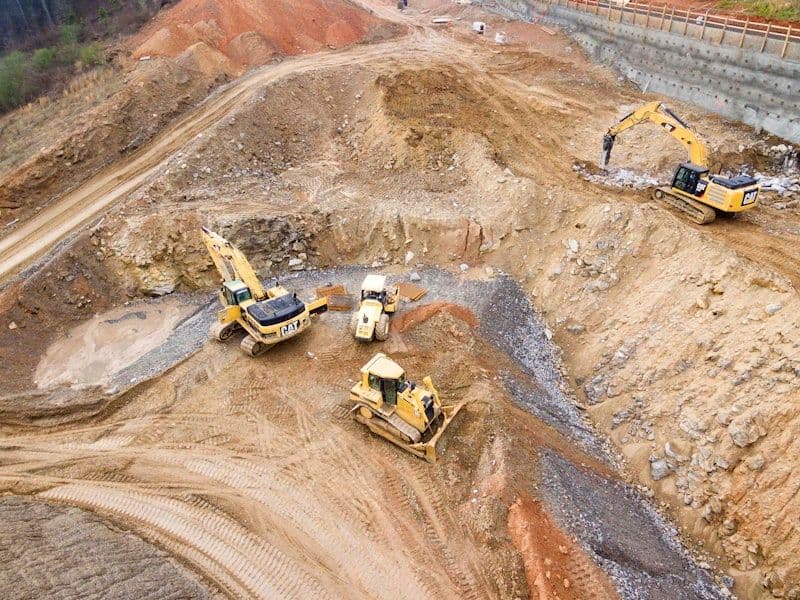
- Equipment utilisation — ensuring cranes, excavators, and other plant are used efficiently rather than idling
Lifecycle Assessment
True sustainability assessment looks beyond construction to the full building lifecycle. AI tools can model the total environmental impact of design decisions across 50-60 years of building life, including maintenance, refurbishment, and eventual demolition.
This lifecycle perspective often reveals counterintuitive insights. A more expensive, higher-quality cladding system that lasts 40 years without replacement may have a lower lifecycle carbon footprint than a cheaper system that needs replacing every 15 years — even though the upfront embodied carbon is higher.
Practical Applications
Green Star Certification
The Green Building Council of Australia's Green Star rating system awards credits for sustainability performance across multiple categories. AI tools can map design decisions to Green Star credit requirements, identifying the most cost-effective path to achieving a target rating.
Rather than pursuing every possible credit, the AI identifies which credits offer the best return on investment — both financially and environmentally — for the specific project context.
Sustainability Reporting
Clients, investors, and regulators increasingly require detailed sustainability reporting. AI automates the data collection and analysis needed for:
- Environmental Impact Statements for development applications
- Embodied carbon reports for NCC and Green Star compliance
- Waste diversion reports for state waste levy requirements
- ESG reporting for corporate sustainability commitments
Material Procurement
AI can integrate with supplier databases to identify sustainable material options that are locally available, competitively priced, and compliant with relevant standards. This turns sustainability from an aspirational goal into a practical procurement decision.
The Business Case
Sustainability is not just a compliance cost. Projects that achieve strong sustainability credentials consistently demonstrate:
- Higher asset values — Green Star-rated buildings command rental premiums of 5-12%
- Faster leasing — tenants increasingly require sustainability credentials
- Lower operational costs — energy-efficient buildings cost less to run
- Tender advantages — government and institutional clients mandate sustainability criteria
- Reduced regulatory risk — getting ahead of tightening regulations avoids costly retrofits
Getting Started
You do not need to pursue net-zero carbon on your first project. Start where the impact is greatest:
- Measure embodied carbon on your next project to establish a baseline
- Run material alternatives analysis on the highest-carbon elements (typically concrete and steel)
- Integrate energy modelling into the design process, not as an afterthought
- Track and report — build the data foundation for continuous improvement
Sustainability is a journey, and AI is the tool that makes each step measurable and actionable.
Want to explore sustainable construction tools for your projects? Let us show you what is possible.