Construction at an Inflection Point
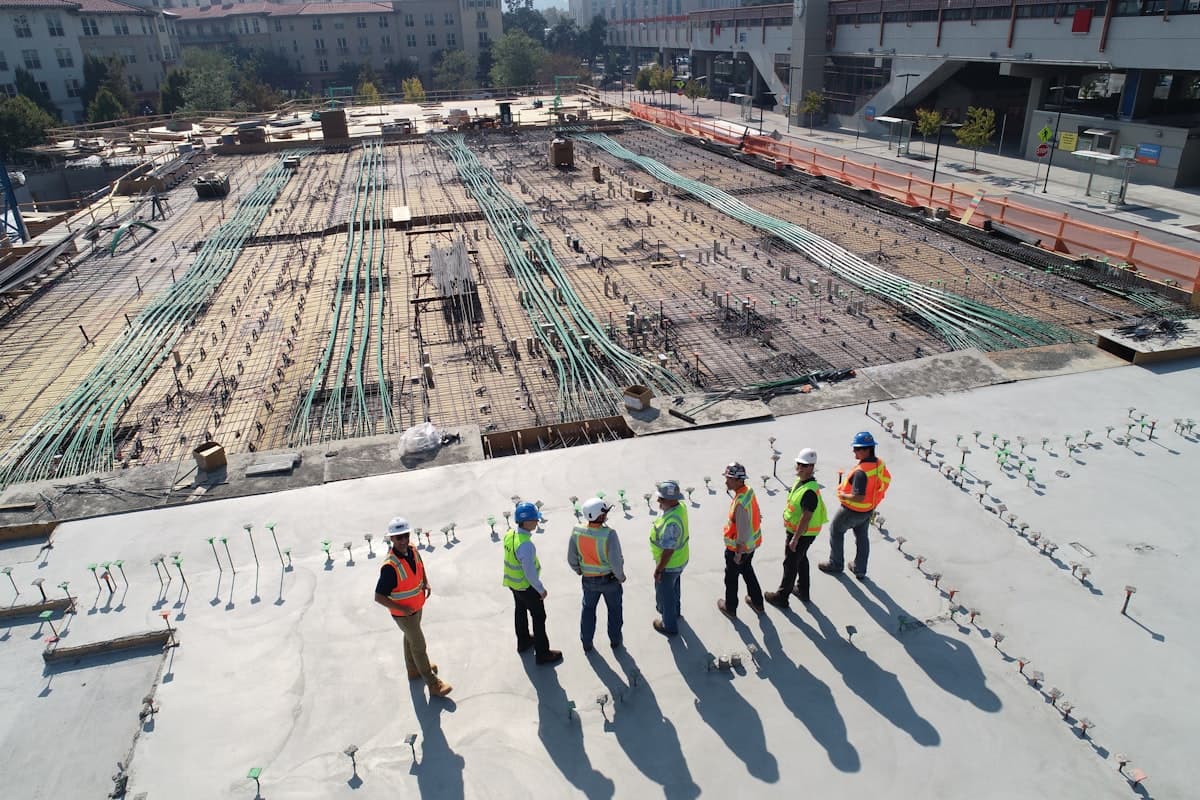
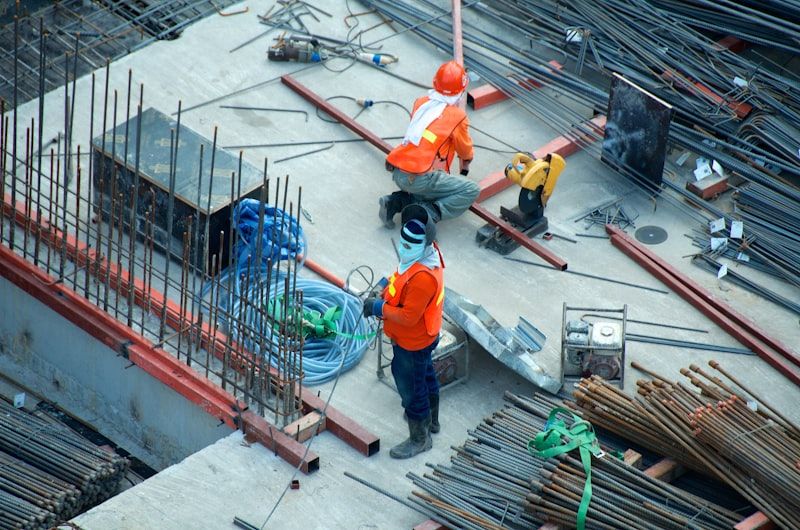
The Australian and New Zealand construction industry stands at a technology inflection point. After decades of being one of the least digitised major industries — ranked alongside agriculture and mining in terms of technology adoption — construction is now experiencing a convergence of pressures and opportunities that are accelerating change.
Housing crises in both countries demand more output. Labour shortages constrain capacity. Sustainability mandates require new approaches. And the technology itself — particularly AI — has reached a level of capability that makes transformation practical, not just theoretical.
Here are the trends we believe will have the greatest impact on the industry over the next three to five years.
Generative AI for Design and Planning
The generative AI revolution that began with text and images is coming to construction design. AI models that can generate building designs from a set of constraints — site dimensions, planning rules, programme requirements, budget parameters — are moving from research labs into commercial applications.
This does not mean AI will replace architects. What it means is that the early design exploration phase — where dozens of options are considered before one is developed in detail — will become dramatically faster and more thorough. An AI system can explore thousands of design configurations in the time it takes a human designer to sketch three, identifying optimal solutions that might never have been considered.
For the Australian market, this is particularly relevant for the medium-density housing that both the federal and state governments are pushing. AI-generated design options that maximise dwelling yield while complying with planning controls could accelerate the design phase of these projects by months.
Autonomous and Semi-Autonomous Equipment
Autonomous machinery is already operating on mining sites across Australia. The same technology is steadily migrating to construction:
- Autonomous earthmoving — GPS-guided dozers and excavators that operate with minimal human input on bulk earthworks
- Robotic bricklaying — commercial systems that lay bricks at rates several times faster than manual methods
- 3D concrete printing — additive manufacturing of structural elements on site
- Autonomous surveying — drones and ground robots that conduct site surveys without a surveyor present
The labour shortage is the primary driver. When you cannot find enough skilled operators, equipment that operates itself becomes not a luxury but a necessity. The firms that invest in autonomous capabilities now will be better positioned as labour constraints intensify.
Digital Twins as Standard Practice
Digital twins — real-time virtual replicas of physical construction projects — are transitioning from innovative to expected. Within three to five years, we anticipate that digital twins will be a standard requirement on most government infrastructure projects and a growing expectation on private commercial work.
The evolution is toward increasingly intelligent twins that do not just reflect current conditions but predict future states. AI-powered digital twins will forecast schedule impacts, identify quality risks, and optimise construction sequences based on real-time data from the site.
For firms that have not yet engaged with digital twin technology, the window for early-mover advantage is narrowing.
Integrated Project Delivery Platforms
The fragmented software landscape in construction — where data lives in dozens of disconnected systems — is consolidating. The trend is toward integrated platforms that provide a single source of truth across estimation, scheduling, quality, safety, and project management.
This is not about one tool doing everything. It is about platforms that connect specialised tools through shared data models and open APIs, creating a unified information environment where a change in the design model automatically updates the cost estimate, the programme, and the procurement schedule.
The AI capabilities that deliver the most value — predictive analytics, pattern recognition, automated decision support — require this kind of data integration to function effectively. Standalone AI tools working on siloed data can only deliver a fraction of their potential.
Sustainability as a Data Problem
The construction industry's sustainability challenge is fundamentally a measurement and optimisation problem. You cannot reduce what you cannot measure, and you cannot optimise what you cannot model.
The next wave of sustainability tools will treat carbon like cost — tracking it in real time through design, procurement, and construction, making it visible in every decision. AI will play a central role in this transition, enabling:
- Automated embodied carbon calculation at the design stage
- Real-time emissions tracking during construction
- Lifecycle optimisation that balances upfront carbon against operational performance
- Regulatory compliance automation as reporting requirements tighten
Firms that build sustainability data capabilities now will be ahead when mandatory reporting arrives — and it is coming.
Augmented Reality on Site
AR technology is maturing to the point where it delivers practical value on construction sites. Current applications include:
- Model overlay — viewing the BIM model overlaid on the physical site through a headset or tablet
- Installation guidance — showing exactly where elements should be positioned, reducing setting-out errors
- Quality verification — comparing as-built conditions against the model in real time
- Safety visualisation — highlighting hazard zones and exclusion areas that are invisible in the physical environment
As AR hardware becomes lighter, more affordable, and more robust for site conditions, adoption will accelerate. The combination of AR with AI — where the system not only shows you the model but tells you what to look at and what is wrong — is a particularly powerful near-term development.
What This Means for AU/NZ Firms
The common thread across all these trends is data. Firms that invest in capturing, structuring, and analysing project data today will be positioned to take advantage of every one of these technologies as they mature.
The practical advice for firms of any size:
- Digitise your workflows — every manual process that can be captured digitally creates data that AI can learn from
- Invest in BIM maturity — BIM is the foundation for digital twins, AR, automated estimation, and design AI
- Build your data asset — historical project data is the fuel for predictive AI models
- Start small, learn fast — pilot new technologies on individual projects before committing to enterprise adoption
- Partner with the right technology providers — choose partners who understand Australian and New Zealand construction, not just technology
The future of construction technology is not about any single tool or trend. It is about building the digital foundation that allows your firm to adopt and benefit from each new capability as it emerges.
At 361°, we are building that foundation. Join us.