The Cost of Poor Quality
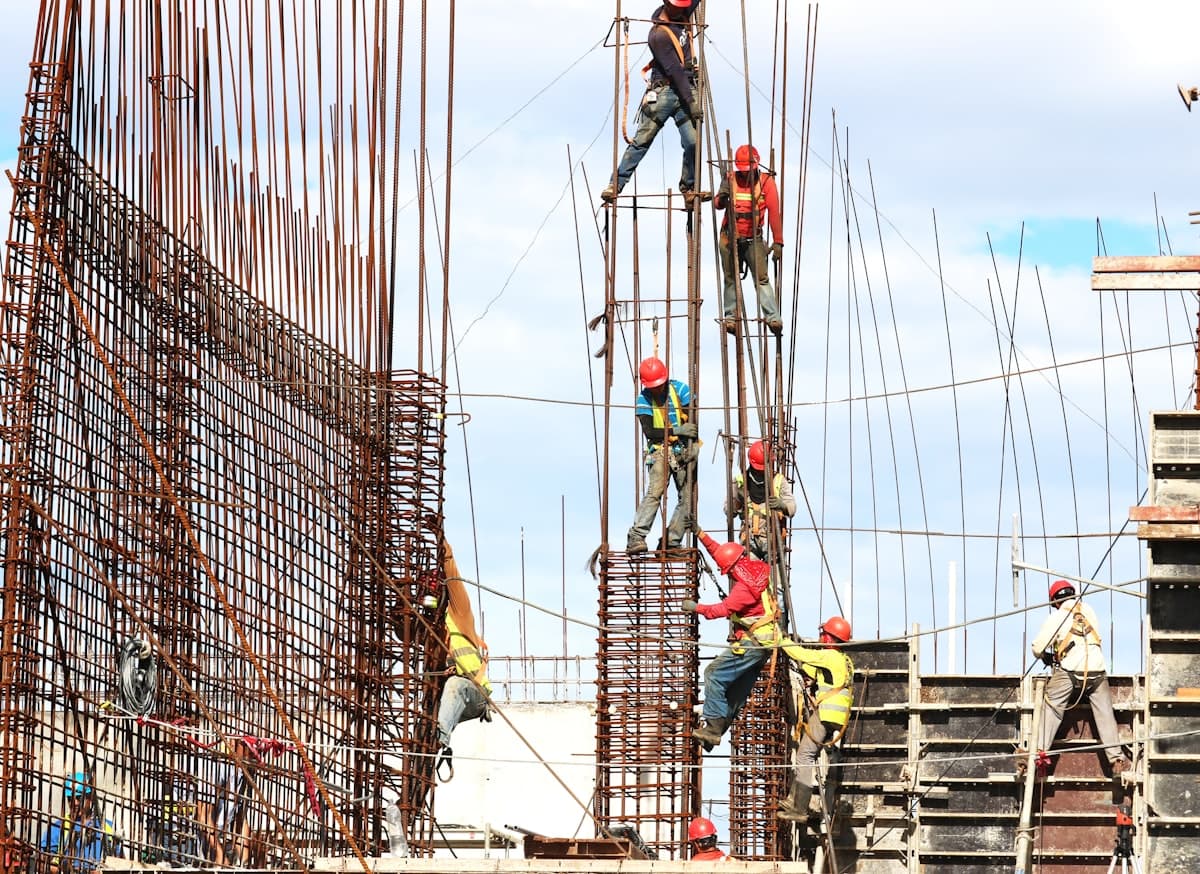
Rework is one of the construction industry's most persistent and expensive problems. Research from the Cooperative Research Centre for Construction Innovation found that rework accounts for approximately 6-12% of total project costs in Australian construction. On a $50 million project, that is $3-6 million spent doing things twice.
Beyond the direct cost, poor quality creates cascading impacts:
- Schedule delays as rework pushes downstream activities back
- Client dissatisfaction and damaged relationships
- Defects liability exposure during and after the defects liability period
- Safety risks from structural or waterproofing defects
Traditional quality assurance relies on periodic inspections, hold points, and the experience of site supervisors. These methods catch many issues, but they are inherently limited by the number of inspectors, the frequency of visits, and the variability of human attention.
How AI Transforms Quality Control
Computer Vision Inspection
AI-powered cameras — mounted on fixed positions, carried by workers, or attached to drones — can continuously scan construction work and compare it against the design model. The system identifies deviations in real time:
- Dimensional accuracy — is the wall in the right position? Is the slab level within tolerance?
- Reinforcement checking — correct bar sizes, spacing, and cover before the pour
- Surface quality — cracking, honeycombing, or finish defects on concrete elements
- Installation compliance — are services installed per the design? Are fire-stopping details correct?
A system that was trialled on a commercial project in Brisbane identified 340 defects during construction that would have traditionally been found during pre-handover inspections — or not found until the defects liability period. The average cost to fix each defect during construction was $800. Post-handover, the estimated average was $3,200. The saving speaks for itself.
Predictive Defect Analysis
Beyond catching defects as they occur, AI can predict where defects are likely to happen based on historical patterns. By analysing data from completed projects, the system identifies correlations between project conditions and defect types.
For example, a model might learn that:
- Waterproofing defects are 3x more likely in bathrooms with complex floor gradients
- Concrete cracking rates increase significantly when pours occur at ambient temperatures above 35°C
- Plasterboard joint defects correlate with crew changeovers during the lining phase
These predictions allow quality managers to focus their attention and resources where they will have the most impact, rather than applying the same inspection intensity everywhere.
Automated Documentation
Every inspection needs documentation — photos, notes, location references, responsible parties. AI quality tools automate this process, generating inspection records directly from the camera feed with:
- Geolocated defect logs tied to the building model
- Automatic severity classification based on defect type and location
- Trend reporting that shows defect rates by trade, location, and project phase
- Compliance evidence that satisfies audit and certification requirements
This documentation is not just useful during construction. It creates a permanent quality record that supports defects liability claims, insurance matters, and facility management throughout the building's life.
Case Study: Mixed-Use Tower in Auckland
A 24-storey mixed-use development in Auckland Central deployed AI quality control across the structural and architectural phases. Over the 18-month construction period, the system:
- Conducted over 12,000 automated inspections — roughly 22 per day
- Identified 890 defects during construction, 73% of which were resolved within 48 hours
- Reduced defects at practical completion by 62% compared to the developer's benchmark
- Cut quality inspection labour by 40% while increasing inspection coverage
The project superintendent noted that the most valuable aspect was not the technology itself, but the culture shift it created. When every trade knows their work is being continuously monitored, the incentive to get it right the first time increases dramatically.
Integration with Existing QA Processes
AI quality control does not replace your existing quality management system. It integrates with it:
- ITP (Inspection and Test Plan) alignment — AI inspections map to your hold and witness points
- NCR (Non-Conformance Report) workflow — defects feed directly into your NCR system
- Certification support — automated evidence collection for ISO 9001 and other quality certifications
- Handover documentation — quality records form part of the building's permanent file
Getting Started
The most practical entry point is a single project with a willing team:
- Identify your highest-cost defect categories — focus the AI there first
- Deploy cameras or scanning on one section — a single floor or zone
- Run in parallel with manual inspections — build confidence in the system
- Measure the gap — compare what the AI finds versus what manual inspection catches
Quality is ultimately about culture, not technology. But technology that makes quality visible, measurable, and actionable supports the culture you want to build.
Want to see AI quality control in action? Schedule a demonstration with our team.